
 040 375 4245
If you are researching the battery rebate in South Australia, you are not alone. Most homeowners are trying to answer three things quickly: do I qualify, how does the discount actually show up in the quote, and what should I do to avoid getting stuck with a system that looks good on paper but underperforms at night.
This guide is written for SA homeowners who want the real mechanics, not sales talk. You will learn what the Cheaper Home Batteries Program is, what counts as eligible, how installation dates are defined, how STCs work at a practical level, and how SA export settings can influence the value you get from adding storage.
What the Cheaper Home Batteries Program Actually Is
The Cheaper Home Batteries Program is a federal pathway that supports eligible home battery systems through Australia’s Small-scale Renewable Energy Scheme (SRES). In most cases, you do not receive cash back from the government. Instead, the value is typically applied as an upfront discount because STCs are created for the installation and usually assigned to a registered agent as part of the sale.
This is why you will often see the discount built into the final price rather than as a separate rebate payment. When a quote is done properly, the installer can explain what assumptions they used for eligibility and documentation so there are no surprises later.
Battery Rebate Eligibility in South Australia (2026)
To benefit from the battery rebate, you need to meet the program rules, and your installer needs to document the job correctly.
The install date rule
Eligibility is tied to when the battery system is considered installed. This is not the day you pay a deposit. It is not the day the battery arrives at your home. In practice, it is linked to compliance certification, which is why reputable installers are strict about paperwork.
If you are aiming to qualify for the battery rebate, make sure your quote includes a written note about how the installation date will be recorded and what documentation is included at handover.
Capacity rules and what they mean in plain language
Battery eligibility includes minimum and maximum capacity requirements, and there can be caps on how much capacity can be supported through STCs. For most households, this matters because it influences the best-value size range. The smart move is to size the battery around your evening and overnight usage, not around the biggest capacity you can afford.
When you ask for pricing, ask for usable capacity, not just the marketing capacity. Usable capacity is what you actually get to cycle daily.
Approved products and clean compliance
Eligibility usually depends on the use of approved components and adherence to proper installation standards. From a homeowner’s perspective, this means you should only consider quotes that clearly list the battery model, warranty terms, and commissioning steps.
How the Battery Rebate Shows Up in Your Quote
Most people expect a rebate to look like a government cheque or a claim they file. In reality, the battery rebate is usually baked into the sale price.
A premium quote should show:
- Battery model and usable kWh
- Any required switchboard work should be a clear line item
- Inverter compatibility statement: keep the existing inverter, add a battery alongside, or upgrade to a hybrid inverter
- Monitoring and commissioning included
- A short section stating the quote assumes eligibility and compliant documentation
If the quote is vague, it is not premium. You want clarity before the install, not after.
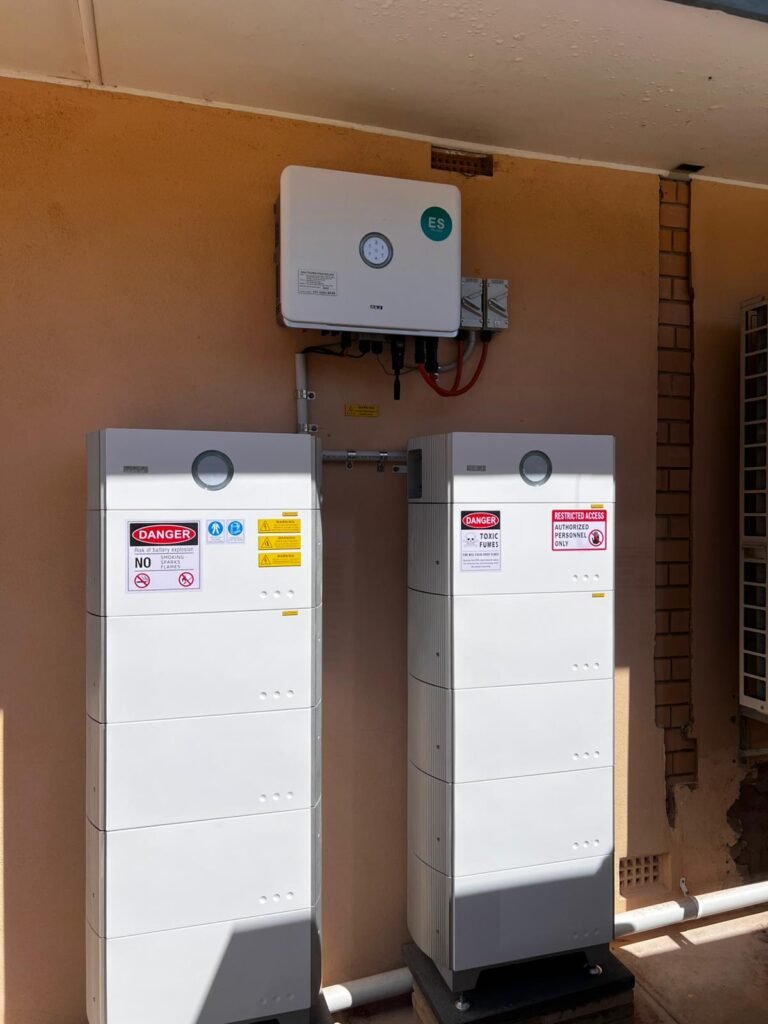
South Australia’s Export Reality and Why Storage Often Wins
SA has high rooftop solar penetration. That changes the economics for many homes because daytime solar exports can be constrained or simply not as valuable as using your own energy.
This is where batteries deliver real value. Instead of exporting a large share of your solar generation during midday, storage allows you to use more of it in the evening when households typically consume more.
This is a key point: the battery rebate can reduce the upfront cost, but your ongoing value comes from self-consumption. A good design focuses on how your home uses electricity, then uses storage to shift your solar into the hours you actually need it.
How to Choose the Right Battery Size for SA Homes
Here’s the sizing logic that keeps results realistic.
Step 1: Estimate your evening and overnight usage
Your battery is mainly covering the period after solar production drops. A practical way to estimate:
- Use time-of-use breakdowns if your bill shows them
- Check smart meter data through your retailer app
- If you cannot access that, list your high-consumption evening loads: cooking, heating/cooling, entertainment, laundry, hot water timing, pool pump schedule
Step 2: Decide your outcome
Most homeowners fall into one of these outcomes:
- Bill reduction only
- Bill reduction plus backup for essentials
- High-demand coverage, including heavier loads
The third option costs more and needs careful electrical design. Many homes get strong results with a sensible storage size that targets consistent night loads.
Step 3: Match the battery to the system you already have
If you already have solar, your battery integration can be:
- Add-on storage that works alongside your existing inverter, or
- A hybrid inverter upgrade if your inverter is older or not compatible
A proper assessment will tell you which path is cleanest. This is also where a well-structured battery rebate quote stands out, because it explains what is included and why.
Existing Solar Battery Upgrade vs New Solar Plus Battery
Battery upgrade for existing solar
This is often the fastest path for homeowners who already export a lot during the day and then buy power back at night. It can deliver a noticeable improvement without replacing panels.
A premium upgrade quote includes:
- Inverter model check and compatibility statement
- Switchboard assessment and any required safety upgrades
- Battery placement plan with clearances and cable route
- Commissioning and monitoring setup
If you are taking this route, ask how the installer handles battery rebate documentation and what they provide in the handover pack.
New solar plus battery bundle
If you are starting from scratch, designing solar and storage together can improve system balance. You can design panel orientation, inverter sizing, and battery integration as one plan.
Both pathways can be eligible if the installation meets the program requirements. The difference is in design efficiency and how much existing equipment you can reuse.
Backup Power: What to Expect in a Blackout
Many homeowners assume that if they buy a battery, their whole house will stay on during an outage. That is not automatically true.
Backup depends on:
- Whether the battery system supports backup mode
- How the switchboard is configured
- Whether you include an essential load circuit setup
- The inverter’s backup output rating and your load profile
A realistic “backup essentials” setup typically covers fridge, lights, internet, and selected power points. Whole-home backup can be possible but requires a different design approach.
If backup matters to you, make sure it is explicitly included in the scope, not implied. This is one of the easiest places for confusion to happen, even when a battery rebate discount is being applied.
What Changes in 2026 and Why Timing Matters
Program settings can change over time, and 2026 includes scheduled changes. If you are planning an installation near a rule change, timing becomes part of your risk management.
Practical best practice:
- Ask your installer to date-stamp the assumptions used for your pricing
- Confirm how eligibility will be determined based on compliance certification
- Request two price scenarios if your install date could fall on either side of a change
If your installer cannot explain this cleanly, do not proceed. A legitimate provider will be comfortable discussing how the battery rebate is applied and what could affect it.
What a Premium Installer Does Differently
There are two battery installs: the one that works and the one that becomes a support nightmare.
A premium installer:
- Confirm inverter compatibility before quoting
- Audits switchboard safety and capacity, not just battery placement
- Sets realistic expectations about savings and backup
- Configures the system for self-consumption, not just maximum exports
- Provides a monitoring setup and a real handover
- Supplies a clean documentation pack so program claims do not get delayed
In 2026, documentation requirements and evidence standards are getting stricter across the industry. That is good for homeowners, but only if your installer’s workflow is structured.
FAQs
Is the battery rebate available in South Australia in 2026?
Yes, the battery rebate is available through the federal program pathway for eligible systems, subject to meeting the rules and correct installation documentation.
Do I get paid money back, or is it a discount?
In most cases, the value is applied as an upfront discount through STCs, which is why homeowners usually see it as a lower purchase price rather than a separate payment.
Can I claim the battery rebate if I already have solar?
Often yes. Battery upgrades for existing solar can qualify if the installation meets the requirements. Your installer still needs to confirm compatibility and compliance.
What size battery should I choose?
Choose a size that matches your evening and overnight usage and your goal. If you want backup power, sizing and switchboard design matter more.
Will a battery always provide backup during a blackout?
Not automatically. Backup requires the right system capability and the right electrical configuration. Ask for “backup essentials” as a defined scope if that is your priority.
Get a Free Quote in South Australia
If you want a clean, premium battery upgrade or a solar plus storage bundle, we will assess your existing system, confirm compatibility, and recommend options that match your usage and goals. We will also explain how the battery rebate is applied in your quote so pricing is transparent.
Peace Electrical & Solar
Email: sales@peaceelectrical.com.au
Phone: 040 375 4245
[Get a Free Quote for a Blackout-Ready Solar System Today!]