
 040 375 4245
If you live in South Australia, you’ve probably noticed solar panels popping up everywhere. And for good reason—South Australia has some of the highest electricity costs in the country and some of the best sunshine levels in the world. That’s where on-grid solar systems come in. Affordable, reliable, and efficient, they’re the most popular choice for households and businesses alike.
Understanding On-Grid Solar Systems
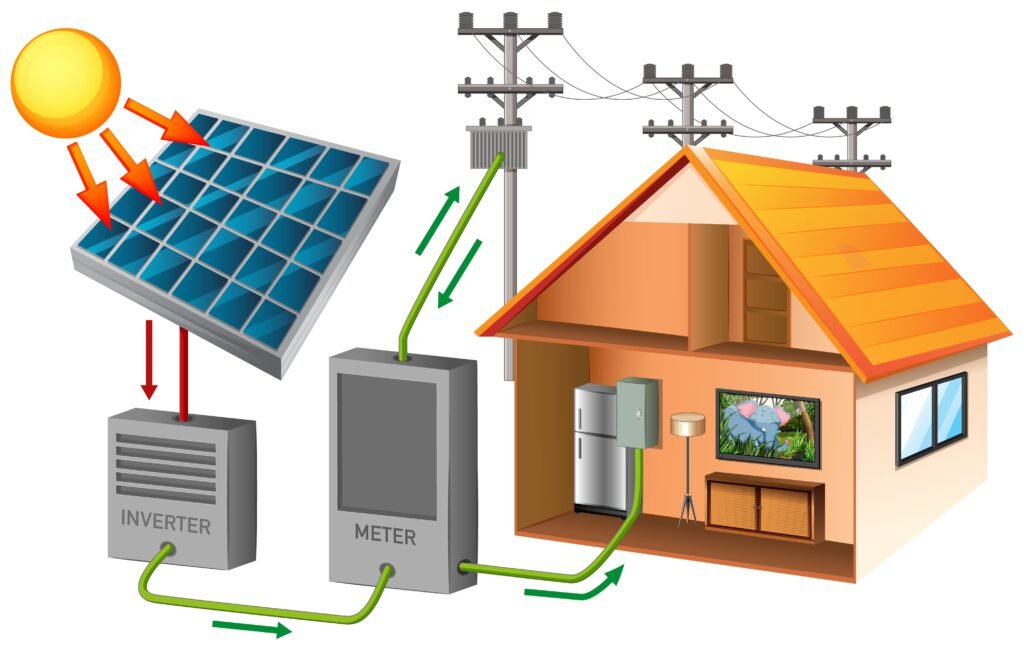
An on-grid solar system is directly connected to the local electricity network. Unlike off-grid systems, it doesn’t rely on batteries. Instead, you can use solar power when the sun is shining and export excess energy back to the grid.
Difference from other systems:
- On-grid: Connected to the grid, no batteries required.
- Hybrid: Mix of both, with solar + batteries + grid connection.
How On-Grid Solar Works
Here’s how it works step by step:
- Solar panels capture sunlight and turn it into DC electricity.
- An inverter converts DC to AC, making it usable for your home.
- Any unused electricity is exported to the grid.
- You earn credits through feed-in tariffs for the energy you send back.
Think of it as running your home on solar during the day and using the grid as your “backup battery.”
Why Choose On-Grid Solar in South Australia?
There are four major reasons why on-grid solar is booming here:
- Sunshine advantage: South Australia has over 2,800 hours of sun per year.
- Generous rebates: Government schemes make solar more affordable.
- Lower bills: Slash or even eliminate your electricity bills.
- Green energy: Reduce your carbon footprint and protect the planet.
Key Components Explained
- Solar Panels – Monocrystalline panels are efficient and long-lasting, while polycrystalline are more budget-friendly.
- Inverters – String inverters are common, micro-inverters suit shaded roofs, and hybrid inverters allow future battery connection.
- Smart Meters – Track your energy usage and exports to the grid.
System Sizes and Options
- 5kW system – Suitable for small households.
- 6.6kW system – The most popular choice for families.
- 10kW system – Best for large homes with higher energy needs.
- 20kW+ systems – Ideal for businesses and commercial properties.
Cost of On-Grid Solar Systems in South Australia
On average, here’s what you can expect:
- 5kW system: $4,000 – $6,500
- 6.6kW system: $5,000 – $8,000
- 10kW system: $8,000 – $12,000
Factors affecting price include panel brand, inverter quality, and installation complexity. Luckily, the Small-Scale Renewable Energy Scheme (SRES) provides rebates to cut down costs.
Savings and Return on Investment (ROI)
A 6.6kW system can save you around $1,200 – $2,000 per year on electricity bills, depending on usage. Most South Australians see a payback period of 3–5 years. After that, it’s pure savings!
Challenges of On-Grid Solar
While on-grid solar has plenty of benefits, you should also consider:
- Dependence on the grid – No power during blackouts unless paired with batteries.
- Low feed-in tariffs – The credit you earn for exporting energy is modest.
- Performance in cloudy weather – Solar production drops in winter or rainy days.
Popular On-Grid System Sizes in South Australia
- 6.6kW: Great for families (average daily use 20–25kWh).
- 10kW: For bigger households with pool pumps, multiple air conditioners.
- 20kW commercial: Perfect for small businesses, workshops, and offices.
Installation Process
- Site inspection – Assess roof space, shading, and orientation.
- System design – Choose panels, inverter, and layout.
- Installation – Mount panels, connect inverter, and wire system.
- Grid approval – Your installer applies to connect the system to the grid.
Maintenance of On-Grid Solar Systems
Solar is low-maintenance but not maintenance-free:
- Clean panels 1–2 times per year.
- Check inverter for error lights.
- Monitor system via apps or online portals.
Government Incentives and Rebates
- SRES (Small-Scale Renewable Energy Scheme): Offers rebates through STCs (Small-Scale Technology Certificates).
- Feed-in tariffs: Earn credits for exporting solar energy back to the grid.
Top Solar Companies in South Australia Offering On-Grid Solutions
- Peace Electrical and Solar – Trusted local expert.
- Tindo Solar – Australia’s only solar panel manufacturer.
- Zen Energy – Popular South Australian installer.
When choosing an installer, check for Clean Energy Council (CEC) accreditation.
Future of On-Grid Solar in South Australia
The future looks bright:
- Smart homes will optimize when and how solar is used.
- Battery-ready systems will allow easy upgrades in the future.
- Virtual Power Plants (VPPs): Households with solar and batteries may soon share power with their community.
Conclusion
On-grid solar systems are the smartest investment for South Australians looking to cut electricity costs, boost energy independence, and go green. With rebates and feed-in tariffs making it more affordable than ever, now’s the perfect time to install solar.
FAQs
1. What is the lifespan of an on-grid solar system?
Most panels last 25–30 years, with inverters lasting 10–15 years.
2. Can an on-grid system work during a blackout?
No—unless paired with a battery, your system shuts down for safety reasons.
3. How many solar panels do I need for a 6.6kW system?
Around 16–20 panels, depending on panel wattage.
4. Are solar panels worth it in South Australia?
Yes—thanks to high electricity prices and plenty of sunshine, solar pays off quickly.
5. Do I need council approval for installing solar?
In most cases, standard rooftop solar doesn’t require approval, but check with your local council.